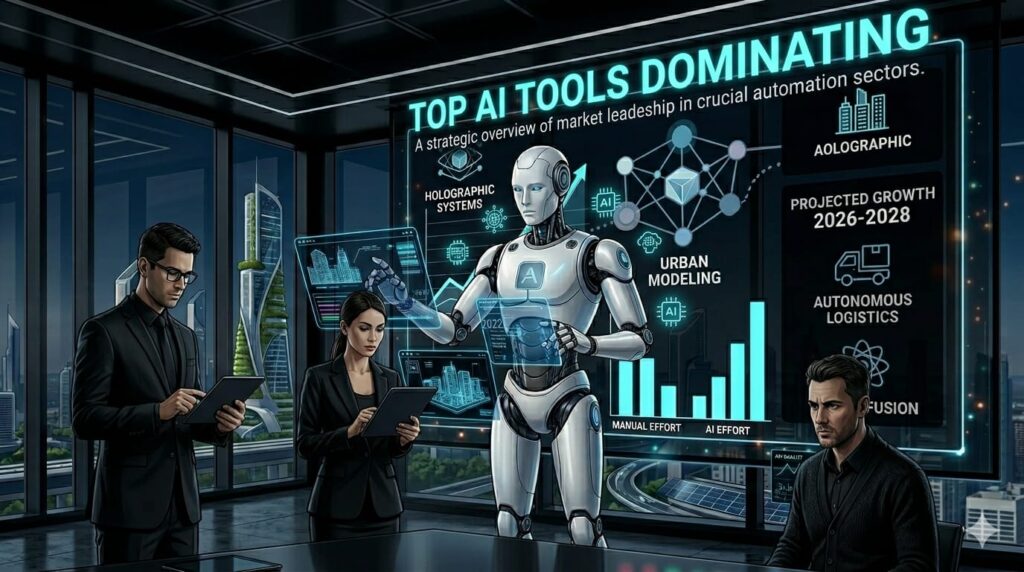
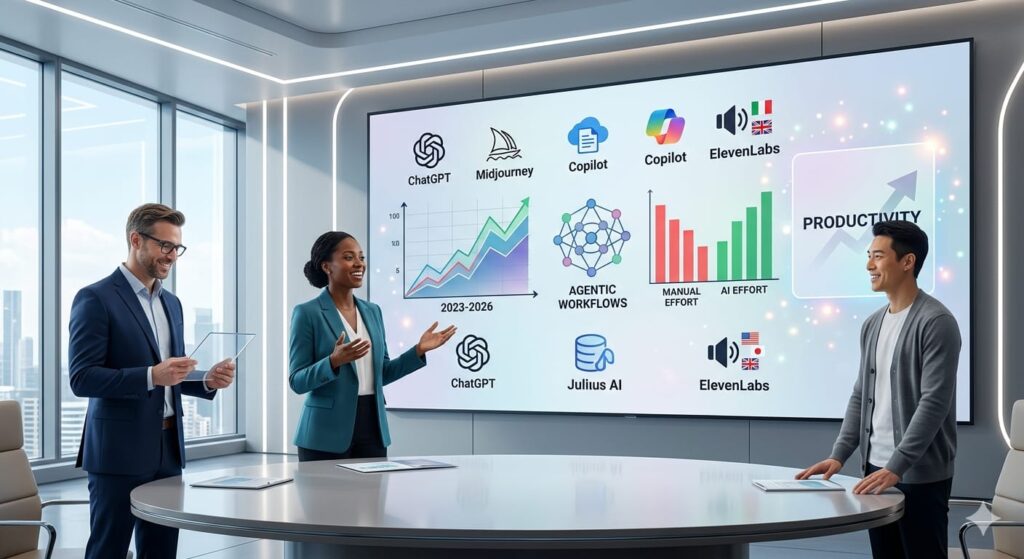
The definition of a productivity bottleneck has undergone a radical transformation. Just a few years ago, progress was limited by time or specialized skill sets. If you couldn’t code, design, or write high-level copy, you were forced to hire an expert. In 2026, that landscape is unrecognizably different. We are no longer debating if AI will impact your workflow; we are identifying the top AI tools that are already redefining it.
Whether you are a freelancer, an executive, or a student, the solution to your heaviest workloads is now an intelligent one. This guide analyzes the trending applications that have shifted from mere novelties into fundamental engines for global collaboration and creation.
🚀 5 Top AI Tools Redefining Professional Productivity
1. The Industry Standard: OpenAI’s ChatGPT (GPT-5)
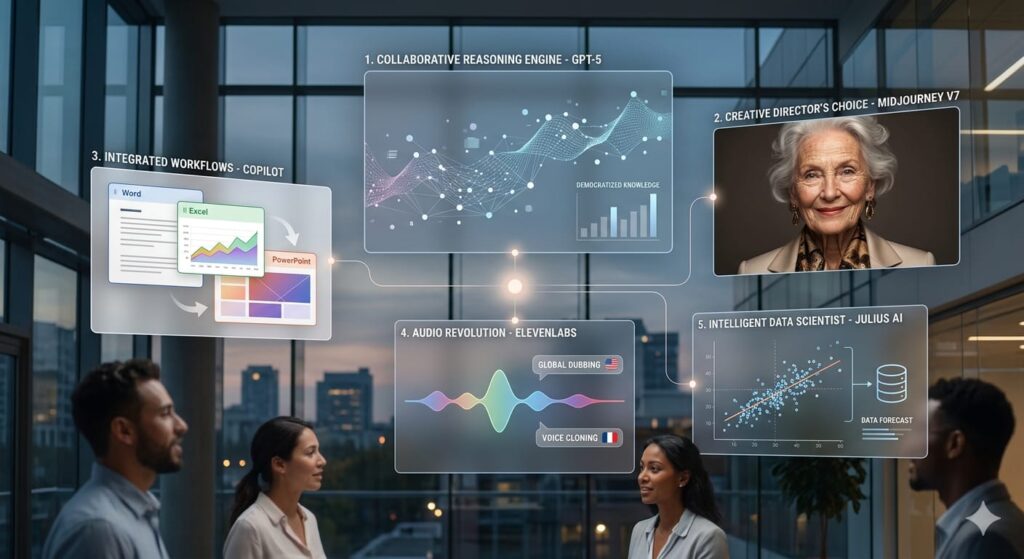
ChatGPT remains the foundation of the AI era. With the deployment of the GPT-5 architecture in early 2026, it has transitioned from a chatbot to a collaborative reasoning engine.
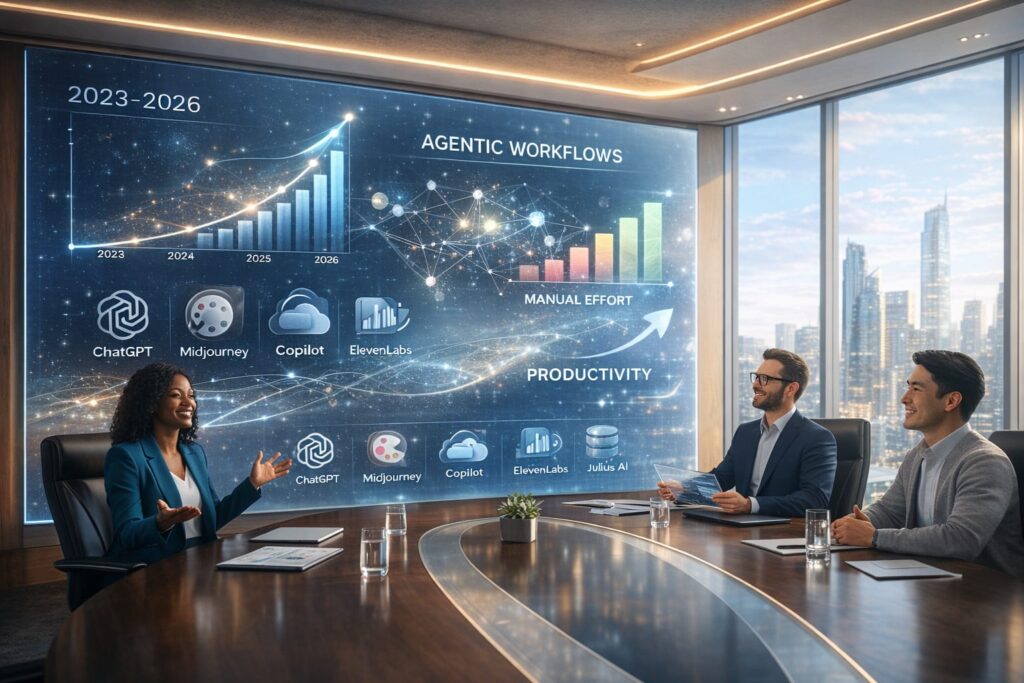
- Key Features: It excels in advanced reasoning, true multimodality (analyzing spreadsheets and generating charts in one go), and a massive context window capable of reviewing thousands of pages of text.
- The Benefit: It democratizes specialized knowledge, turning hours of research and drafting into mere minutes of work.
2. The Creative Director’s Choice: Midjourney V7
For visual aesthetics, Midjourney V7 is the undisputed champion. It is the tool used when the final output must be indistinguishable from high-end commercial photography or digital art.
- Key Features: Perfected photorealism, sophisticated style transfer for brand consistency, and a robust web interface that allows for precise in-painting and canvas expansion.
- The Benefit: It provides massive cost efficiency, allowing high-end commercial concepts to be finalized in minutes rather than days.
3. The Power of Integrated Workflows: Microsoft Copilot
Microsoft Copilot has won the battle for institutional adoption by embedding GPT-level intelligence directly into Word, Excel, PowerPoint, and Teams.
- Key Features: Dynamic document creation from simple outlines and real-time Teams meeting management that captures action items and emotional “temperature.”
- The Benefit: It maintains workflow continuity, reducing cognitive friction by keeping the intelligence layer within the apps you already use.
4. The Audio Revolution: ElevenLabs
ElevenLabs leads the market in voice synthesis, making it indispensable for global content creators.
- Key Features: Instant voice cloning with as little as a minute of audio, emotional expressiveness, and automated global dubbing in over 30 languages.
- The Benefit: It allows creators to instantly localize content for an international audience while retaining the speaker’s original voice characteristics.
5. The Intelligent Data Scientist: Julius AI
For structured data analysis, Julius AI acts as a dedicated data science team within your browser.
- Key Features: Seamless integration with SQL, Google Sheets, and CSV files, combined with the ability to perform contextual data modeling and auto-cleaning of messy datasets.
- The Benefit: It empowers non-technical roles to derive deep insights and forecasts without needing a background in data science.
📈 The Strategic Advantages of AI Integration
Adopting these top AI tohttps://matseotools.com/?utm_source=Pinterest&utm_medium=organicols is no longer just an “option”—it is a necessity for remaining competitive. The benefits include:
- Massive Productivity Gains: Routine tasks like coding and summarizing are automated, freeing you for high-value strategic thinking.
- Unprecedented Scalability: Small teams can now execute projects at the scale of large multinational agencies.
- Enhanced Decision-Making: Specialized models like Julius AI ensure that your strategy is driven by verified data rather than guesswork.
⚖️ Navigating Precautions and the Future
Despite their power, these systems are not infallible oracles. Users must stay aware of AI hallucinations, ethical concerns regarding copyright, and the potential for content “sameness.” The true winner in this landscape is the person who understands how to manage the machine, rather than just competing with it.
Looking ahead, we are moving toward Agentic Workflows. Soon, we will stop using chatbots and start configuring goal-oriented agents that autonomously interface with the digital world to complete entire projects without supervision.
Final Conclusion
The top AI tools of 2026—from ChatGPT to Julius AI—are gateways to amplified human potential. They are not replacements for your vision or empathy; they are multipliers for your productivity. Embrace these tools today to ensure you are leading the charge into the future of work.